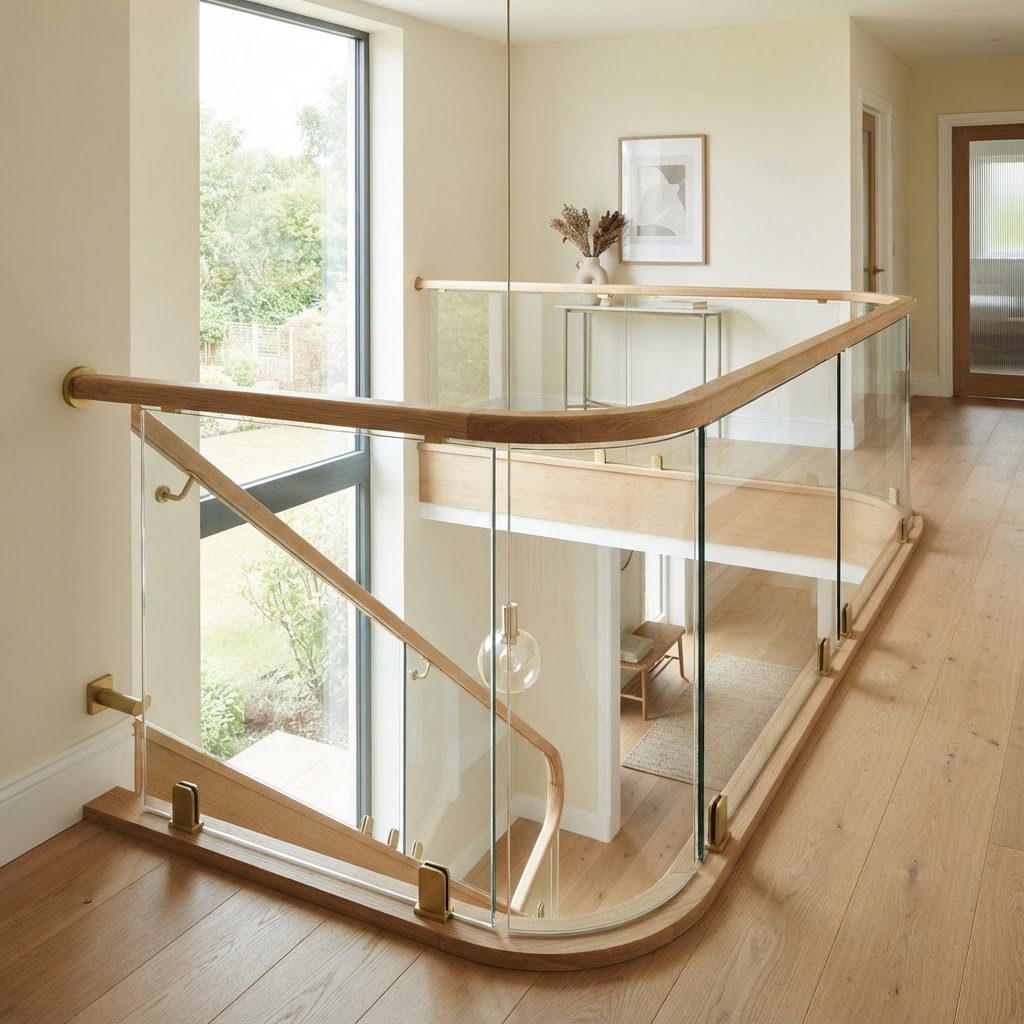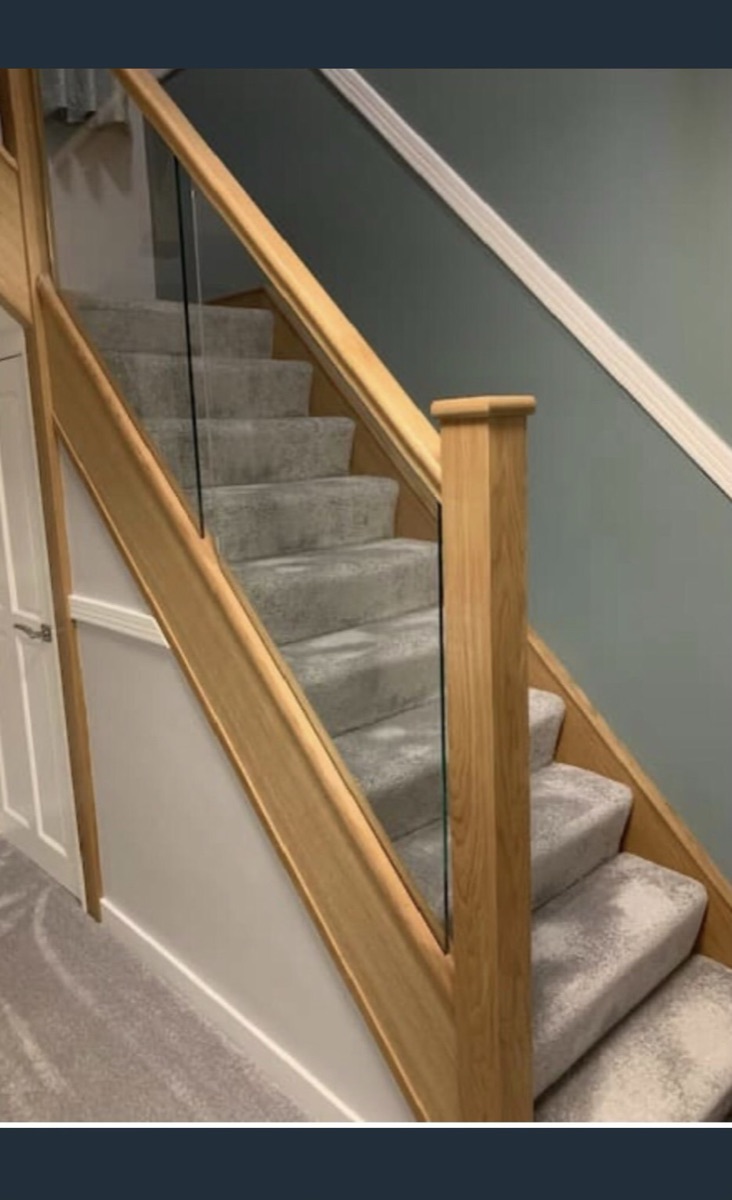
If your staircase is tired, carpeted or just not to your taste, you have two routes to a solid hardwood finish: clad the existing stairs, or rip them out and build a new bespoke staircase. Both end in real oak. They are very different jobs in cost, mess and possibility — here is how to tell which one is right for you.
What stair cladding actually is
Cladding — sometimes called retreading — covers your existing staircase in solid hardwood. New treads, risers and, if you want, a new handrail, spindles or glass are fitted over the sound structure that is already there. You keep the skeleton of the stairs and replace everything you see and touch. Done well, you cannot tell it from a new staircase.
Done properly, this is a premium, fitted job — not a DIY veneer kit. Our treads are 22mm solid European oak through the full thickness, not a thin oak veneer over MDF, and every staircase is surveyed before we start. You can keep your existing balustrade with a solid oak retread, or upgrade the whole visible staircase with a full transformation — see our solid oak staircase renovations for what is involved.
When cladding wins
- Your stairs are structurally sound. If the existing flight is solid and in the right place, there is no reason to remove it.
- You want to save money. Cladding reuses the structure, so it typically costs a fraction of a full rebuild — from £2,395 for a standard 14-step flight in solid oak.
- You want it done quickly and cleanly. Most standard straight-flight jobs are fitted in a day or two once surveyed and prepared — with far less dust and disruption than ripping a staircase out.
- The layout already works. You are changing the look, not the shape or position of the stairs.
When a new staircase wins
- You want to change the shape or position. Opening up a hallway, swapping a straight flight for a curve, moving the stairs — only a new bespoke staircase can do that.
- The existing structure is worn or non-compliant.If the stairs creak, sag, or don't meet current Building Regs, cladding only hides the problem. Better to start again.
- You want a statement piece. A cantilevered or curved staircase is a design and engineering project — that has to be built, not clad.
Side by side
In short: cladding is the faster, cheaper, lower-mess route when the stairs are sound and the layout is right. A new staircase is the answer when you want to change the shape, fix a failing structure, or create something sculptural. Both, done properly, give you a solid hardwood staircase — the difference is how far you need to go to get there.
Not sure which applies to your stairs? It is exactly what we assess on a free survey — and if cladding is not suitable, we will tell you honestly and quote for a replacement instead. If cost is your main question, our guide to how much a bespoke staircase costs breaks down both routes.