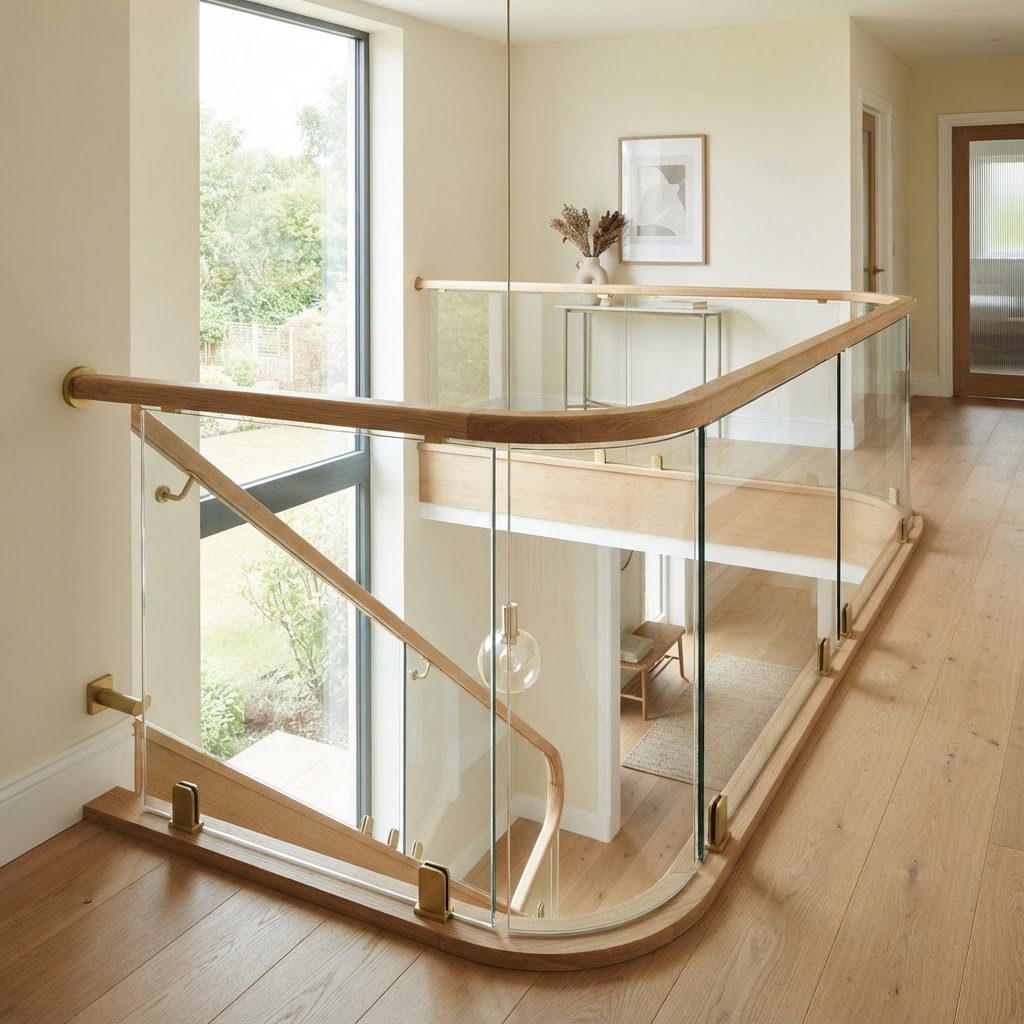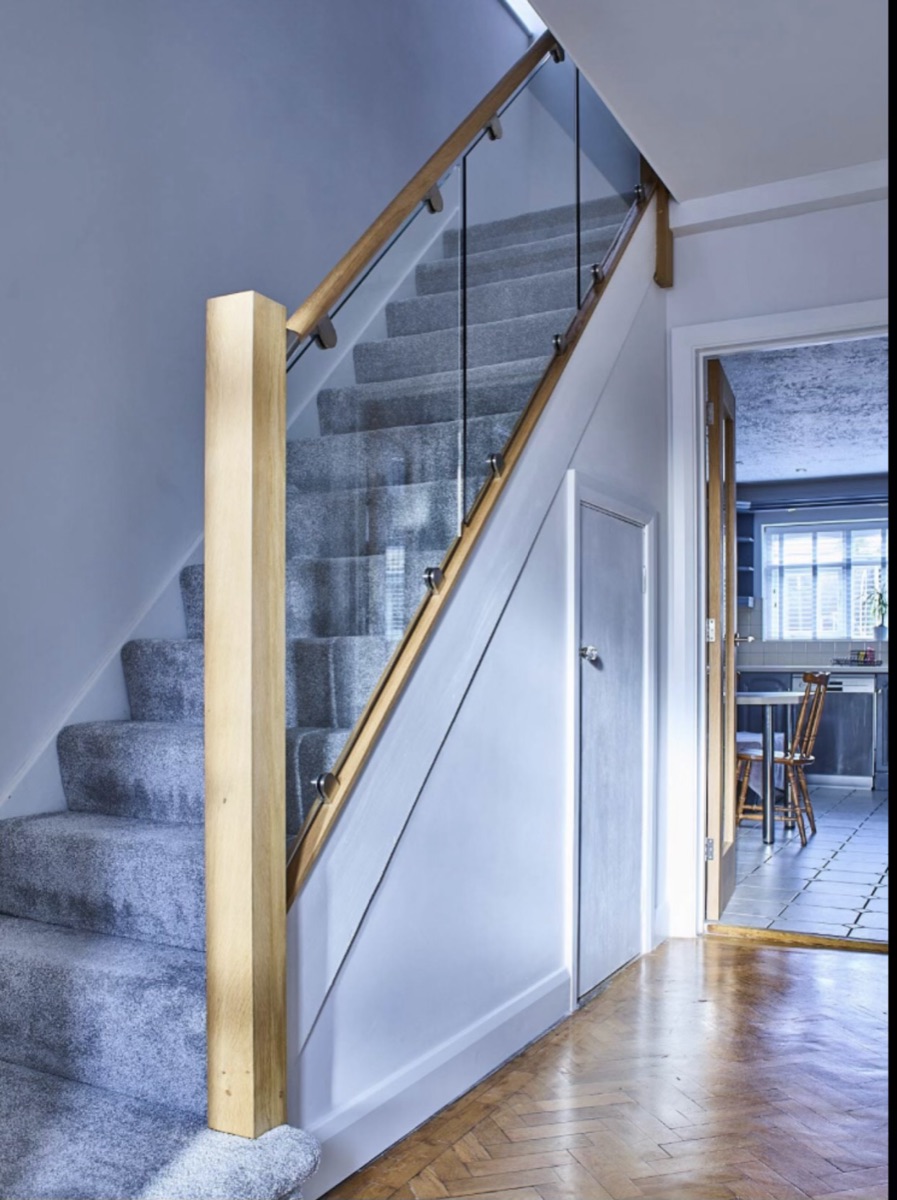
Timber choice sets the whole character of a staircase — the colour, the grain, how it wears, and a good part of the cost. Oak, walnut and ash are the three we are asked for most. Each is a genuine hardwood that will last for generations; they just look and behave differently. Here is how to choose.
Oak — the timeless default
Oak is the staircase timber for good reason. It is hard-wearing, widely available, takes a finish beautifully and suits almost any interior, from a period cottage to a new build. European oak has a warm, honeyed tone and an open, characterful grain that mellows as it ages.
- Look: warm golden-brown, prominent grain.
- Hardness: hard and durable — ideal for treads.
- Cost: the most cost-effective of the three.
- Best for: most homes; a safe, timeless choice.
Walnut — the premium statement
Walnut is the luxury option. Its deep chocolate-brown colour and flowing, sometimes dramatic grain make a staircase feel rich and considered. It pairs especially well with contemporary interiors and with glass balustrades, where the dark timber and clear glass play off each other.
- Look: deep dark brown, elegant flowing grain.
- Hardness: hard and stable, slightly softer than oak.
- Cost: the most expensive of the three.
- Best for: a statement centrepiece; modern homes.
Ash — the pale, modern choice
Ash is the timber to reach for when you want light and clean rather than warm and traditional. It is pale, almost blonde, with a straight, subtle grain that suits minimal and Scandinavian-influenced interiors. It is also tough and shock-resistant, which is why it has long been used for tool handles and sports equipment.
- Look: pale cream to light brown, straight grain.
- Hardness: tough and shock-resistant.
- Cost: comparable to oak, sometimes a little less.
- Best for: light, contemporary and minimal interiors.
How to choose
Start with the room, not the timber. If your interior is warm and traditional, oak will feel at home. If it is dark, modern and you want a wow moment, walnut earns its premium. If it is bright, pared-back and Scandinavian, ash keeps everything light. You can also mix — oak treads with darker-dyed risers, or a walnut handrail on an oak flight — to get the best of both.
Whichever you choose, we build it in 100% solid hardwood, never veneer — and we bring samples to the survey so you can see the timbers in your own light before you commit. Weighing up the total spend? See how much a bespoke staircase costs.